

Customer service reps get burnt out. It’s just a fact of life in the job. You start to feel exhausted, not just from the long hours but from dealing with the same stressed out customers day in, day out, without any break. It’s not just one bad day or a long shift that’s the problem, it’s weeks of stress slowly piling up and taking a big chunk out of your energy and motivation.
Contact center managers often only catch on to burnout when one of their top performers suddenly leaves. And it’s a big problem: it knocks performance, wrecks retention rates, and really hurts your customer satisfaction scores.
In this article, we’ll break down what causes customer service rep burnout, the early warning signs to look out for, practical prevention strategies, and how deploying AI chatbots can significantly ease the operational load on your frontline teams.
What Is Customer Service Agent Burnout?
Burnout is a state of exhaustion, all three ways: physical, mental, and emotional. It happens when someone is under pressure for too long dealing with a load of demanding customers and gets no chance to recover. It’s not a single bad day where you feel tired and grumpy, it’s a gradual buildup over weeks and months of feeling unable to cope with all the pressure.
What’s it like working in a contact center? Dealing with angry customers all day, every day is soul crushing. Reps are expected to be perfect: composed, empathetic, and helpful, call after call. This constant emotional work takes its toll, which is why so many reps eventually walk away.
Why Customer Service Agent Burnout Is a Growing Problem
Rep burnout was once just something they worried about in HR, but now it’s actually costing contact centers a fortune.
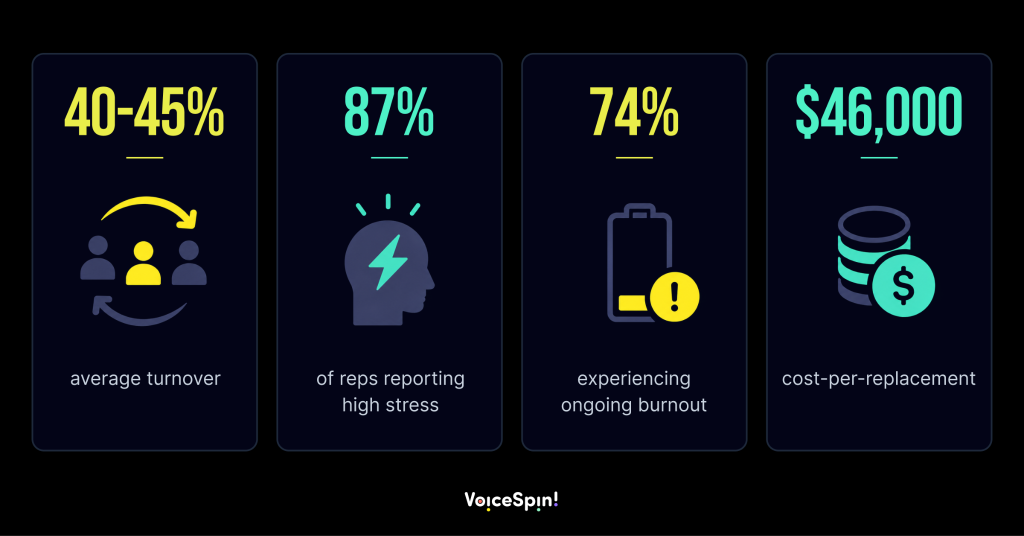
- The bad news in the numbers: Reps keep leaving the job. According to Insignia Resources, contact centers face a whopping 40% to 45% turnover a year. In some sectors like banking and healthcare, it’s even worse, at 55% to 60% a year.
- Rep stress is out of control. Industry data from Insignia Resources shows that a massive 87% of reps feel stressed out at work, and 74% are actually experiencing burnout.
- Burnout is lurking in the numbers. Industry benchmarks show that a rep utilization rate above 85% means you’re heading into burnout territory.
But here is the good news: this problem can be fixed. Contact centers that genuinely look out for their reps see real benefits, including better CSAT scores, more efficient call routing, and higher staff retention. Tackling burnout is a major priority, not some fluffy wellbeing initiative.
What Makes Customer Service Agent Burnout Happen?
Burnout doesn’t happen overnight. It’s usually the result of a load of structural issues building up over time:
- Targets that are just impossible to meet. Setting reps to get complex calls resolved quickly while keeping to strict Average Handle Time targets is a way to create constant anxiety.
- Repeating the same easy questions over and over. It’s draining to spend hours answering the same basic questions again and again (e.g. “Where’s my parcel?”).
- No freedom to use your skills. Overly rigid scripts and no say in the decision making process make reps feel like just a cog in the machine and not a person who can solve problems.
- No chance to breathe. High utilization rates without any buffer time between calls leave reps feeling exhausted all the time.
- Managing by just looking at the numbers. When managers only look at the dashboard numbers and don’t worry about rep well-being, frontline teams start to feel like they don’t matter.
Signs of Customer Service Agent Burnout
Catching burnout early makes it so much easier to fix. So keep an eye out for these warning signs across your floor:
- A big spike in absenteeism or last minute call-offs.
- A drop in call quality scores or CSAT ratings.
- A hike in AHT paired with a drop in First Call Resolution (FCR).
- Reps taking it out on customers or just looking like they don’t care.
- Reps pulling out of coaching sessions or looking completely uninterested.
- Low morale creeping into team messaging channels.
When you see these signs popping up across multiple reps, the problem is not the individual, it’s the system.
Ways to Prevent Customer Service Agent Burnout
The best contact centers mix simple operational changes to look out for their teams before performance plummets.
1. Balance Speed and Quality Metrics
Don’t pit metrics against each other. Demanding a lower AHT while simultaneously pressuring reps for higher customer satisfaction scores is a losing battle. Give your team the space to focus on resolution quality over raw speed.
2. Build in True Recovery Micro-Breaks
Give your reps proper downtime to recover. Don’t just nod along to the idea of micro-breaks, actually make some happen.
3. Clear Out the Monotonous Workload
Answering repetitive questions all day is a fast track to mental exhaustion. By automating routine inquiries, you allow your human reps to focus on complex, high-value problem-solving that keeps them engaged.
4. Transform One-on-Ones into Well-Being Checks
Train your managers to look past the KPIs during check-ins. Regular, informal conversations focused on workplace sentiment, mental bandwidth, and support tools can catch and fix burnout long before a rep decides to hand in their notice.
How Do AI Chatbots Help Prevent Agent Burnout?
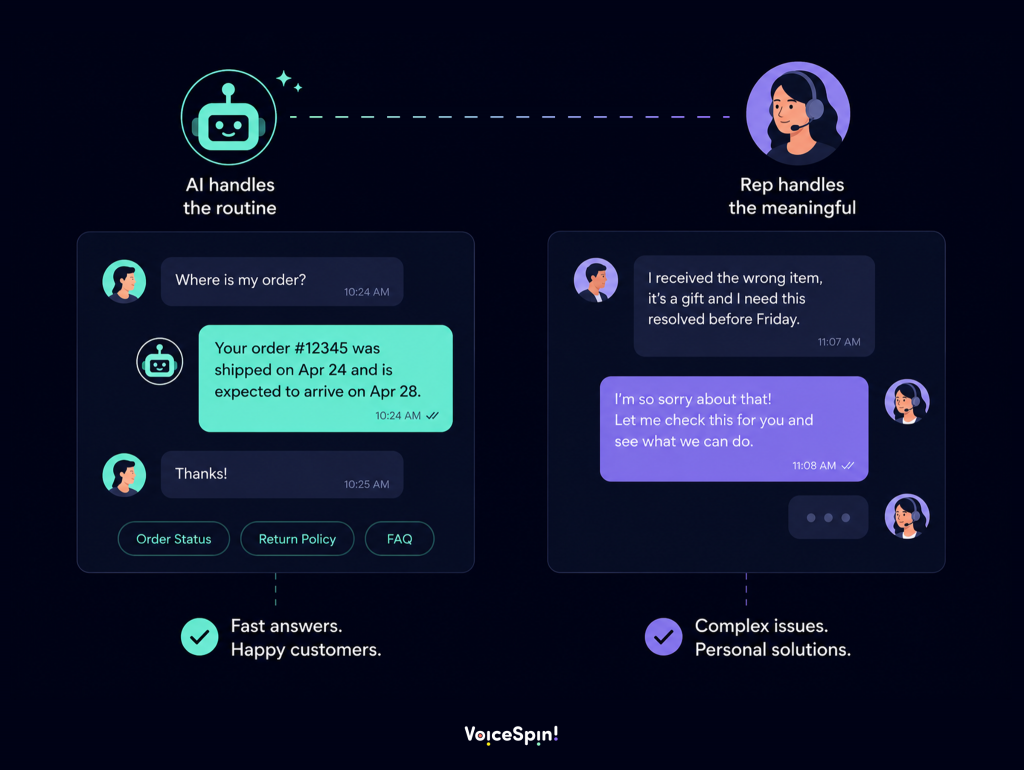
The most effective way to prevent rep burnout is to simply cut the number of repetitive interactions they’re forced to deal with all day long. Modern Conversational AI systems don’t replace your human staff, they actually protect them. By deflecting the dull interactions that turn people off, you’re keeping your reps from becoming disengaged.
AI tools really do help shield your reps from stress in five key ways:
- Deflecting Repetitive Tickets: Routine tasks like order tracking, password resets, and basic billing inquiries can be handled entirely by an AI chatbot, stripping the monotony out of the human rep’s day.
- Flattening Peak-Hour Surges: During high-traffic seasonal rushes, an AI voice bot or chatbot absorbs the initial wave of simple queries, preventing reps from facing back-to-back queue spikes.
- Providing Real-Time Rep Assistance: Advanced AI-powered tools analyze live chats or calls as they happen, automatically serving up recommended replies or knowledge-base links. That means reps spend less mental energy on routine answers and save it for the conversations that really need it.
- Letting Your Reps Do the Work That Matters: With routine queries automated, reps can focus on the sort of conversations that need human empathy, creativity, and judgment, the kind that will actually get them enjoying their job.
- 24/7 Coverage Without Overtime: Chatbots are always on, always ready to handle the night shifts and weekend overflow without forcing your local team to work crazy hours.
By offloading tedious work, managers can create a work environment where reps actually look forward to coming to work. And that’s one of the best defenses against long term burnout. For a wider look at how automation is reshaping frontline roles, read our piece on how AI is changing the role of call center reps.
Frequently Asked Questions
What is the primary operational cause of rep burnout?
On the face of it, there are loads of factors, but the thing that really stands out is a rep utilization rate above 85%. When you’re pushing reps to do 100% of their job with no downtime, stress just compounds and compounds.
How much does rep burnout cost a business?
That’s a big deal too. Estimates suggest that replacing just one call center rep can set you back about $20,000. Factor in the lost productivity, onboarding costs, and customer dissatisfaction, and the hit to the bottom line can be as high as $46,000 per rep.
Can AI chatbots genuinely improve rep retention?
Yes, they do. By automating the mind-numbing, repetitive queries that eat up most of the day, AI chatbots cut the volume of interactions that reps have to deal with. That lets them get on with the work that really matters, the work that will keep them happy and engaged.
How often should supervisors check in on rep well-being?
It’s a good idea to make it a regular thing, weekly or bi-weekly. You don’t want to wait until the annual performance review to find out someone’s been struggling with stress, because by then it’s probably too late.




 +18889082995
 +442036084160
 +97237237006
 Call on WhatsApp

