

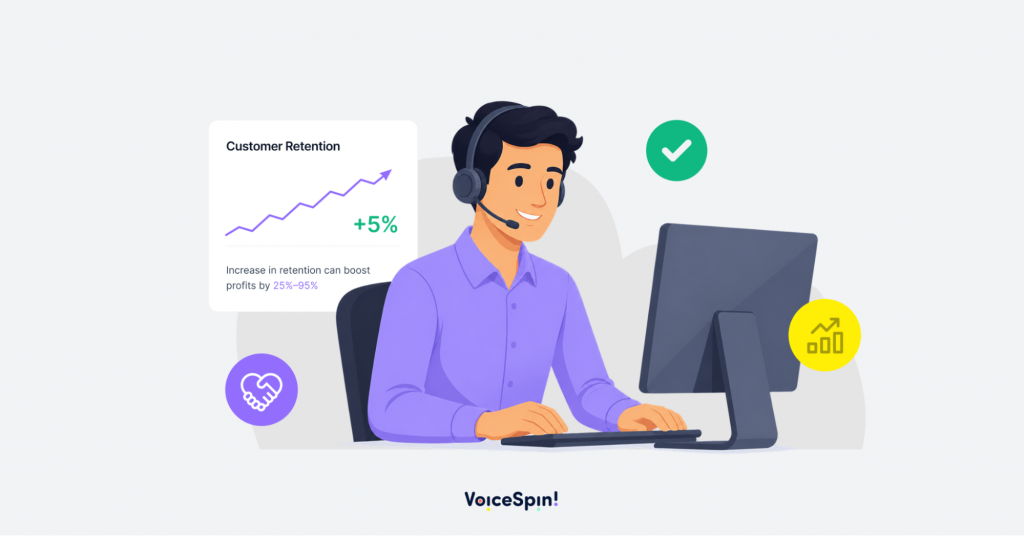
It’s getting harder to hold on to customers, yet it’s becoming more crucial to get it right. According to a recent Harvard Business Review study, a 5% bump in customer retention can make a huge difference to profits – we’re talking anywhere between 25% and 95% extra cash coming in. But here’s what really worries me: most call centers are still stuck in reactive mode, only jumping into action after things have already gone pear-shaped instead of trying to stop customers from jumping ship in the first place.
By 2026, the call centers that really get customer retention right will be doing things differently. They’ll be using AI tech to identify customers who are on the verge of leaving, deliver service tailored just to them, resolve problems right away, and turn every interaction into a chance to deepen that relationship, not just resolve the issue and send them on their merry way.
This guide is all about the best ways to keep your customers on board – with real-life examples, tips on how to measure how you’re doing, and exactly how AI and call center tech can help you rethink your approach to customer retention.
What is Customer Retention in a Call Center Context?
Customer retention in a call center context is all about keeping your existing customers happy, loyal, and – most importantly – choosing to stick with you over anyone else. It’s worth pointing out that call center customer retention is a bit of a different beast from other forms of customer retention – it’s all about the interactions you have with customers face to face: every call, every routine check-in, every complaint that needs fixing, and every upsell pitch. That’s all a retention moment in the making, a chance to really get to know the customer and either build up your relationship or, on the other hand, help them get to the door.
Customer retention in the call center isn’t just about ticking a box to see if you’re meeting your targets anymore; it’s a vital part of your overall growth strategy. It also directly impacts how much cash comes in, how much the customer is actually worth over their lifetime, and how well your brand is viewed by the public.
Why Customer Retention Matters More Than Ever in 2026
The business case for investing in call center customer retention has never been more compelling.
Acquiring a new customer is considerably more expensive than retaining an existing one – typically 5 to 7 times more. Loyal customers tend to spend more over time, are more likely to try new products, and are more likely to refer others to you. Brands that are effective at personalization are 71% more likely to report improved customer loyalty, according to a 2024 Deloitte Digital report.
However, the churn figures are significant. Customers do not provide advance notice before leaving; they become silent, downgrade, or switch to another provider, and by the time this appears in your metrics, they are already gone. In call centers, long wait times, being asked to repeat information, and unresolved issues on the first call are among the most common reasons customers leave.
In 2026, as AI raises the standard for customer service, the gap between call centers focused on retention and those that are not will continue to widen.
Key Customer Retention Metrics to Track
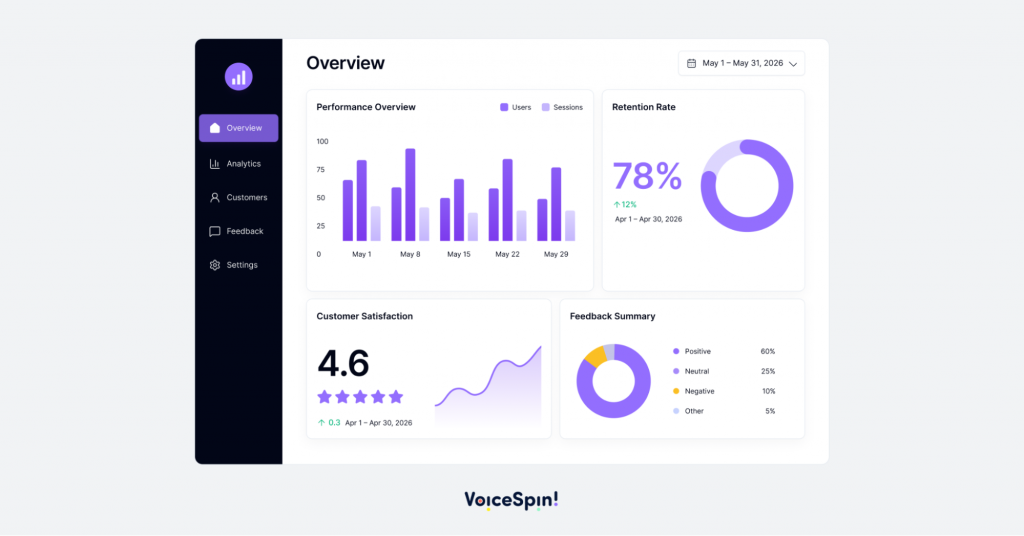
Before you start building a customer retention strategy, you need to know where you stand. Here are the key metrics that actually drive retention performance:
Customer Retention Rate (CRR)
To calculate CRR, use this formula:
CRR = ((Customers at end of period – New customers acquired during period) / Customers at start of period) x 100
Track CRR monthly and quarterly to identify trends and measure the impact of retention initiatives over time.
Customer Satisfaction Score (CSAT)
CSAT measures customer satisfaction straight after an interaction, usually using a 1 to 5 scale.It directly indicates whether interactions are helping or hurting retention. Low CSAT on specific interaction types or agents highlights where to focus improvement.
Net Promoter Score (NPS)
NPS measures loyalty by asking customers to rate likelihood of recommending you on a scale of 0 to 10. Promoters (9-10) minus detractors (0-6) gives your NPS. A rising NPS correlates strongly with improved retention and organic growth through referrals.
First Call Resolution (FCR) Rate
FCR measures the percentage of customer issues resolved on the first contact without a callback or follow-up. High FCR rates are one of the strongest predictors of customer retention in call center environments. Every time a customer has to call back about the same issue, satisfaction and retention probability drop significantly.
Average Handle Time (AHT)
While AHT should never be optimized at the expense of resolution quality, unusually high handle times can indicate process inefficiencies or agent skill gaps that contribute to customer frustration and churn.
Churn Rate
Churn rate is the inverse of retention rate – the percentage of customers who stop doing business with you over a given period. Monitor churn by customer segment, interaction type, and agent to identify specific retention gaps.
10 Proven Customer Retention Strategies for Call Centers
1. Prioritize First Call Resolution Above Everything Else
Nothing hurts customer loyalty more than getting stuck in an endless loop of calling back over the same unresolved problem again & again . One metric stands head & shoulders above the rest when it comes to keeping customers from jumping ship: First Call Resolution.
If you want to get your FCR rates up to speed , make sure your agents have all the customer history & context right in front of them before the call even starts , throw in some smart knowledge base tools that give agents instant access to the right info, give your agents the freedom to sort out common issues on their own without having to go running to their supervisor , and keep a close eye on FCR at the agent and team level – that way you can figure out where your staff needs some extra training.
The truth is, when customers finally get their issue sorted out on the first try, they’re a heck of a lot more likely to keep coming back for more than those who end up having to make multiple phone calls – which makes making some real gains in FCR one of the top customer retention strategies out there for call centers.
2. Personalize Every Interaction With CRM Data
Customers expect to be recognized. When a customer calls in and has to repeat their name, account number, and the history of their issue to every agent they speak with, it signals that the company doesn’t value their time or their relationship.
True personalization in a call center requires integrating your contact center platform with your CRM system so that agents have a 360-degree view of the customer – including purchase history, previous interactions, open tickets, and communication preferences – before they say hello.
With VoiceSpin’s Salesforce integration and other CRM integrations, customer data appears automatically the moment a call connects, giving agents everything they need to deliver a personalized, contextual experience from the first second.
3. Shift From Reactive to Proactive Customer Support
Reactive support – waiting for customers to call with problems – is a churn accelerator. By the time a customer picks up the phone to complain, their satisfaction has already dropped. Proactive support means reaching out to customers before they have a chance to become frustrated.
Proactive customer retention strategy examples in call centers include outbound check-in calls following a product purchase or onboarding, proactive notifications about known service issues before customers call to report them, follow-up calls after a complex or difficult interaction to confirm the issue was fully resolved, and renewal reminders and loyalty outreach before a customer’s contract expiration.
VoiceSpin’s AI Dialer enables call centers to run proactive outbound campaigns at scale – ensuring that high-value customers receive timely outreach without requiring agents to manually manage call lists.
4. Use AI Speech Analytics to Identify At-Risk Customers
One of the most powerful customer retention strategies available to contact centers in 2026 is using AI speech analytics to detect churn signals in real time – before a customer decides to leave.
AI-powered speech analytics can identify sentiment patterns, keywords, and behavioral signals across 100% of call interactions that indicate a customer may be at risk of churning. This includes expressions of frustration, mentions of competitors, repeated complaints, and escalation language.
With VoiceSpin’s AI Speech Analyzer, contact center managers can set up automated alerts when at-risk signals are detected, enabling proactive intervention – a callback, a retention offer, or a supervisor follow-up – before the customer makes the decision to leave.
5. Reduce Wait Times and Eliminate Hold Music
Long wait times are one of the most common and most preventable drivers of customer churn. Research consistently shows that customers are willing to wait far less time than most contact centers assume – and that every second on hold increases the likelihood of abandonment and reduces the probability of retention.
Effective call center customer retention strategies for reducing wait times include implementing AI voice bots to handle routine inquiries automatically and reduce the volume reaching human agents, using intelligent call routing software to connect customers to the right agent the first time, offering in-queue callbacks so customers don’t have to wait on hold, and using AI predictive analytics to forecast call volume and staff accordingly.
6. Build an Omnichannel Retention Experience
In 2026, customers move fluidly between voice, WhatsApp, email, live chat, and social media – and they expect a consistent, connected experience across all of them. A customer who raises an issue on WhatsApp and then calls in to follow up should not have to start the conversation from scratch.
Omnichannel consistency is a critical component of contact center customer retention because it eliminates one of the most frustrating experiences a customer can have – feeling like they don’t exist as a person across different channels.
VoiceSpin’s omnichannel platform centralizes customer communications across voice, WhatsApp, SMS, email, and live chat in a single interface – giving agents a complete, unified view of every customer interaction regardless of which channel it happened on.
7. Empower Agents to Resolve Issues Without Escalation
Every avoidable escalation you can prevent is a major risk when it comes to customer retention. The more customers get shuffled between different agents & departments, the more their frustration grows, the longer you keep them on the line and the less likely you are to resolve the issue altogether.
Contact center customer retention really starts to take off when agents have the power to sort out simple problems without needing their supervisor to sign off on it , they’ve got the right information to answer customers’ queries correctly the very first time, and they get instant AI guidance that gives them the confidence to deal with tricky situations.
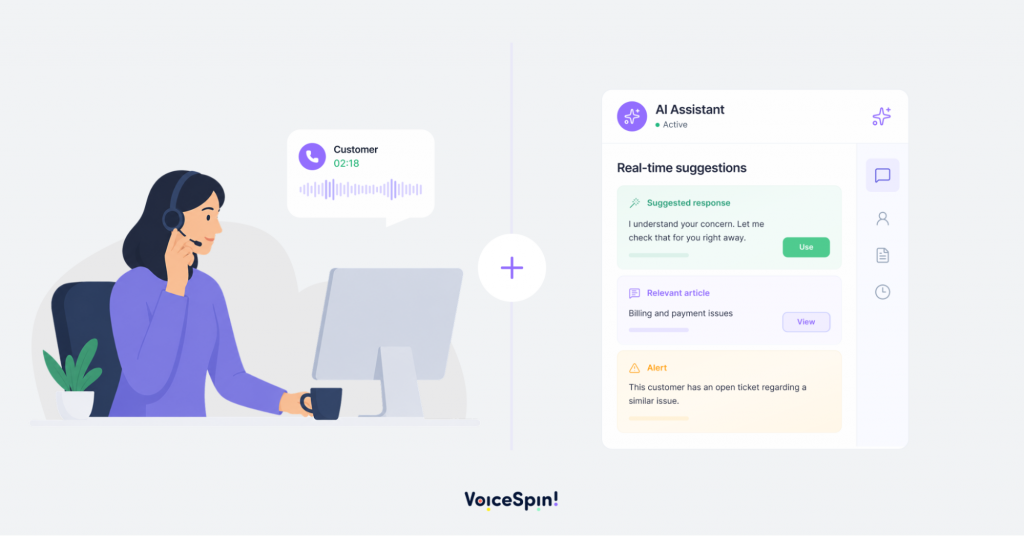
Tools that use AI to help your agents do their job can offer real time suggestions of what to say, point them in the direction of the right information, and even suggest what actions they could take during a live call – all of which cuts down on the number of times an issue gets passed up the chain & boosts both first call resolution rates and customer satisfaction scores.
8. Implement a Customer Loyalty and Retention Strategy
Beyond one off interactions , a deliberate and well thought out customer loyalty and retention strategy can really pay off in the long run , keeping customers coming back even when other companies are actively trying to swoop in and steal them away.
Customer loyalty and retention strategy ideas that actually work in call centers include VIP type programs for your high-value customers that get them priority treatment and their own dedicated teams of agents , proactively reaching out to customers to acknowledge their milestones – birthdays , work anniversaries or when they hit a certain spending threshold – plus getting early access to new products or features and getting tailor made offers to keep them on board when you think they might be about to leave.
At the end of the day the most effective loyalty programs go way beyond just doling out reward points . They build a real relationship between the customer and the company by making customers actually feel seen , valued and understood – at every contact point.
9. Close the Feedback Loop After Every Interaction
Customers who leave a negative review and never get any feedback from the company are a heck of a lot more likely to just give up and go somewhere else compared to customers who do get to see some actual changes made as a result of their feedback. Closing that feedback loop means you need to regularly collect feedback from customers, take a close look to see what kind of patterns are emerging , actually do something about the issues you find and then let the customer know what youve done to improve their experience.
Use those post call surveys to grab some immediate feedback, customer satisfaction surveys to get a read on just how loyal your customers are and some AI powered speech analysis to dig up some trends that arent just showing up in the tiny percentage of customers who bother to fill out a survey. When customers see that their feedback is actually making a difference, it can actually build a trust that keeps them sticking with you even when the competition comes knocking or things go a little sideways.
10. Monitor Retention Performance at the Agent Level
Customer retention is not just an organizational outcome – it’s an agent-level behavior. Some agents consistently retain customers. Others, unknowingly, accelerate churn. Without visibility into agent-level retention performance, it’s impossible to know which is which.
VoiceSpin’s call center QA software enables managers to build custom scorecards aligned to retention behaviors, monitor agent performance against retention KPIs, and deliver targeted coaching based on real interaction data – not assumptions.
Customer Retention Strategy Examples by Customer Type
Different customers need different approaches when it comes to customer retention. Here’s how to tailor your strategy to each customer segment
High-Value Customers
Dedicate a team of agents or account managers to them. Make sure they hit the phones quickly by giving them priority over everyone else. Regularly check in with them and make sure they feel like they’re getting good value from your services. Before their contract is up, create some personalized offers to keep them from jumping ship. Keep a close eye out for signs they’re getting ready to leave – your AI analytics should be able to pick up on that pretty quickly.
At-Risk Customers
If your AI spots them getting restless – and if your system is set up right, it probably will – don’t wait a minute to spring into action. Get them in touch with one of your more experienced retention specialists. Give that specialist the freedom to offer them a deal that makes sense for both of you. And make sure they follow up after every difficult interaction – that way, you know you’re not just patching over the problem. Keep an eye on how they’re doing after you’ve tried to fix things – did getting in touch with your customer retention specialist actually make a difference?
New Customers
Get their onboarding experience off to a flying start and make sure they can get help whenever they need it. It’s crucial that you check in with them during that first 90 days – that’s when most new customers decide to leave. Make sure the service they get is consistent with what they were promised when they signed up in the first place – that way you build trust right from the start. Keep a close eye on how happy they are – will they stick with you, or are you going to lose them to one of your competitors?
Long-Term Loyal Customers
Make sure they know just how much you value them – years of loyal service deserve some serious recognition. Try to come up with some special perks that show you appreciate their loyalty – and make sure you’re not taking them for granted. Long-time customers often feel like you’re not paying enough attention to them, so make sure you’re proactive – show them that you remember they’ve been with you from the start.
How AI is Changing Customer Retention in Contact Centers
Artificial intelligence is really starting to shake things up in the world of contact center customer retention. Here’s where it’s making the biggest difference
Predictive Churn Detection
Your AI speech analytics tool can listen in on every single customer interaction, and use that to spot customers who are getting restless – even if they’re not actually saying they want to leave. This means you can switch from being reactive and trying to keep customers from leaving to actually being proactive and stopping it from happening in the first place – you’re turning customer retention into a science.
Personalization at Scale
With AI on the job, you can treat every single one of your millions of customers like they’re the only one that matters. You can figure out what they’re after and suggest something that’ll make ’em happy – all without having to manually look through their file and figure it out for yourself. And with AI, you can even use what you know about each customer to come up with new ways to sell them more stuff – you never knew your customers were so valuable.
Automated Retention Campaigns
AI-powered dialers can automatically identify customers approaching renewal, customers who have experienced service failures, or customers who haven’t engaged recently – and trigger proactive outreach campaigns without manual list management. VoiceSpin’s AI Dialer connects agents only to live conversations, maximizing the efficiency of outbound retention calls.
Real-Time Agent Support
AI agent assist tools provide agents with real-time guidance during live calls – including retention-specific suggestions, de-escalation prompts, and relevant knowledge base content – improving both the quality of individual interactions and the consistency of the retention experience across the entire agent team.
100% Quality Monitoring
Traditional QA reviews 1-5% of calls. AI-powered speech analytics monitors every interaction, giving retention managers complete visibility into whether retention behaviors are being consistently applied – not just in the sample.
Frequently Asked Questions
What is a customer retention strategy for a call center?
A call center’s customer retention strategy is all about holding onto customers for the long haul – that means using a combination of tools and processes designed to keep existing customers happy, invested in the business and sticking with you. At the end of the day, the key to success here is to get things right first time (get that first call sorted), use your customers own data to make their interactions a bit more personal, be proactive with customer support before things start to go pear-shaped and stay on top of early warning signs that a customer is about to jump ship.
What are the best customer retention strategy examples for contact centers?
The best customer retention strategies for contact centers revolve around being proactive and reaching out to customers before there’s even a problem – that way you can catch issues before they become a major headache. You can also make real-life offers to customers who are at risk of leaving, like special deals or extra perks. Another good idea is to set up special teams and agents for really important customers and make sure the experience is the same whether they’re chatting online, on the phone, or via messaging.
How do you measure customer retention in a call center?
Customer retention is about tracking a bunch of different metrics – like how many customers are still sticking with you (Customer Retention Rate), how happy they are (Customer Satisfaction Score), whether they recommend you to their mates (Net Promoter Score) and how many times you have to go back to the same issue (First Call Resolution rate).
What is the relationship between customer loyalty and retention strategy?
Customer loyalty and retention strategy are pretty closely linked, but they’re not one and the same thing. Retention is about keeping customers from leaving, while loyalty is about building a deep connection with customers that turns satisfied customers into people who actually want to stick around and recommend you to others.
How does AI improve customer retention in contact centers?
AI has a big role to play in improving customer retention in contact centers – it can help you predict which customers are most likely to leave so you can go and talk to them before it’s too late. It also lets you deliver personal service to every customer because you’ve got the data and tools to do it at scale. And, you know, it even lets you automate some of the retention campaigns that you’d otherwise have to do manually – which is a big help when it comes to being proactive and reaching out to customers who are behaving in a certain way.
What is the biggest driver of customer churn in call centers?
Most customers leave call centers because an issue isn’t getting sorted out and they have to deal with different people or channels to get it fixed, or they just feel like the service provider doesn’t actually care about them as an individual.

 +18889082995
 +442036084160
 +97237237006
 Call on WhatsApp

