

Key Takeaways
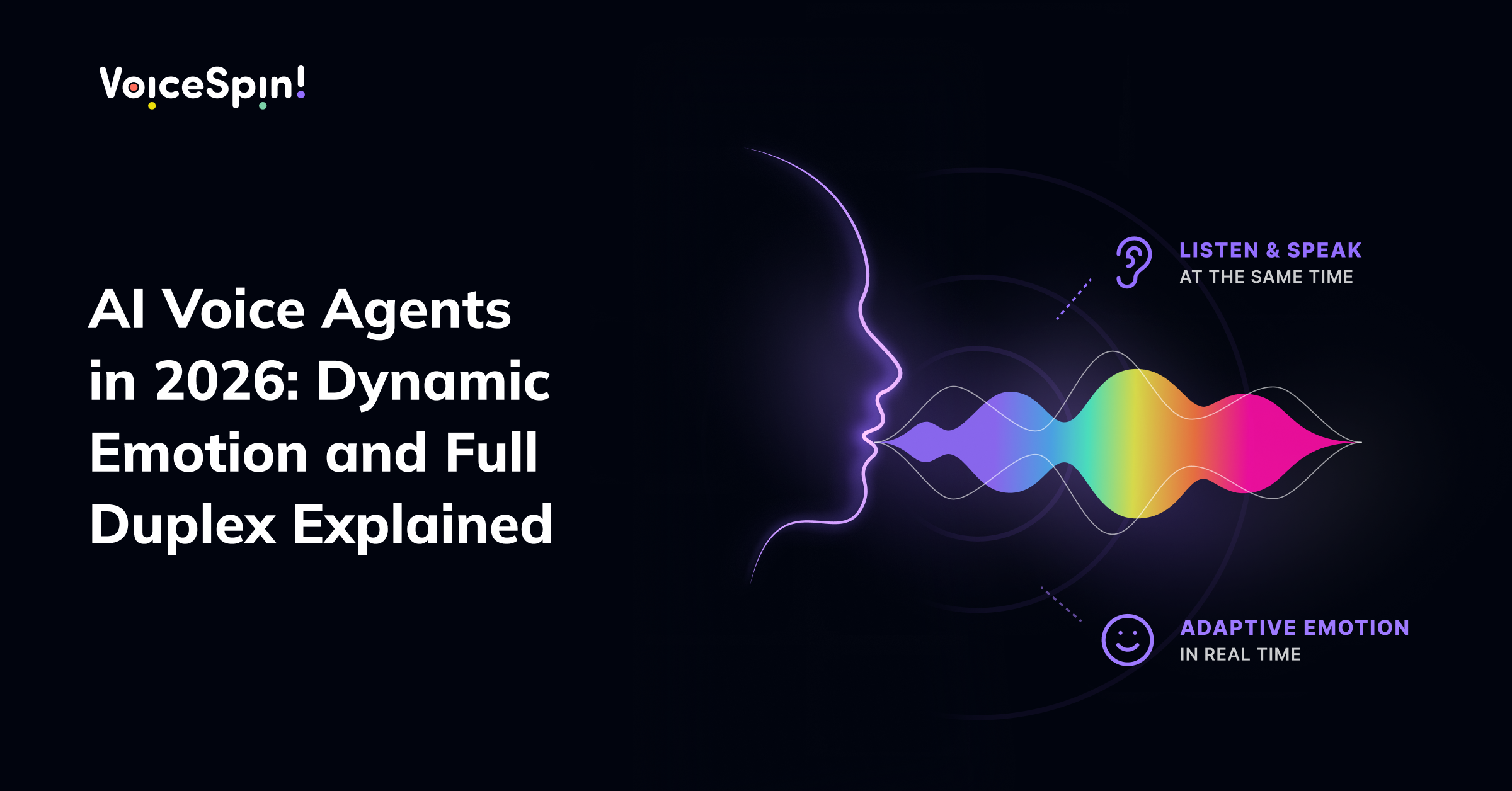
- An AI voice agent with dynamic emotion adjusts tone, pace, and warmth across a single call rather than using one fixed setting throughout
- Full duplex allows an AI voice bot to listen and speak at the same time, which is what makes real-time emotional adaptation possible
- Fixed-tone voice AI opened sales calls with enthusiasm at exactly the moment enthusiasm reads as pressure
- Conversational AI that sounded distinctly robotic a year ago has changed substantially, which makes older evaluations unreliable
- VoiceSpin’s AI Voice Bot supports both full duplex conversation and dynamic emotion across the arc of a call
Ask most people what a robotic voice sounds like and they’ll probably tell you it’s one that is flat, even, unchanging from start to finish. They mean that it sounds the same at minute nine as it did at minute one.
That is the problem the current generation of AI voice agents has solved, and it is a more interesting problem than it first appears. The question was never how to make an AI voice bot sound enthusiastic. It was how to make one stop being enthusiastic at the moment enthusiasm stops being appropriate.
What Is an AI Voice Agent?
An AI voice agent, sometimes called an AI voice bot or AI phone agent, is a conversational AI system that handles voice calls autonomously. It understands natural speech, responds without a predefined menu tree, and resolves inquiries or qualifies leads without a human rep on the line.
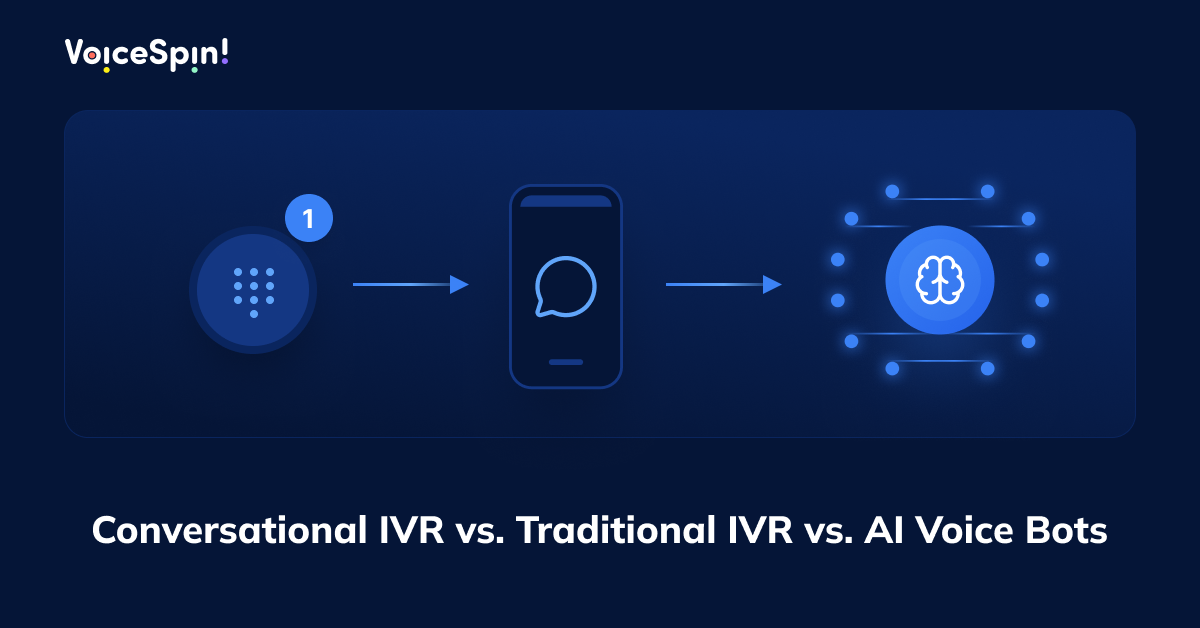
The distinction between an AI voice agent and older interactive voice response is not a matter of degree. IVR routes callers through fixed decision trees. A modern voice AI system holds a conversation, handles unexpected input, and escalates to a human rep with full context when a call exceeds what it should handle alone.
The Old Approach: One Tone for the Whole Call
For years, deploying a voice AI meant choosing a personality, setting a tone and sticking with it for the whole call. Usually that meant enthusiastic, because that is what sales teams sound like.
If a rep is opening a cold call with enthusiasm, the reasoning went, then the AI voice agent should sound enthusiastic too. The result was a voice bot that greeted a really frustrated customer with the same level of brightness that it used on a super enthusiastic lead, and closed a difficult service call with the same level of energy that it opened with.
It was not that the tone was wrong. It was that the tone was fixed, and no real conversation stays in one emotional register from start to finish.
Most people have an instinct for this, without even thinking about it. When they are on a call, they adjust their tone and pace and warmth based on what the other person is saying. Do they hear hesitation? They slow down. Do they hear irritation? They calm right down. And by the end of the call, they sound different. Warmer. Less formal.
What Dynamic Emotion Means in Voice AI
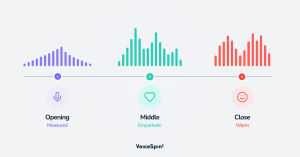
Dynamic emotion means that the AI voice agent can change its delivery as it’s going along, rather than sticking to just one setting that you chose before the call even started.
Take an outbound sales call, for instance. This is where the shift is clearest.
In the open, high enthusiasm is often exactly wrong. The person on the other end did not ask for the call. Energy at that moment reads as pressure, and pressure reads as a script. A measured, unhurried opening earns more attention than a bright one.
In the middle, when the customer raises a concern or explains a constraint, what the moment needs is empathy. Not performed sympathy, but a change in pace and warmth that signals the objection was heard rather than waited out.
At the close, if the conversation has gone well, the register shifts again. There is a rapport that did not exist at the start, and the delivery can reflect it. Warmth at the close is earned in a way that warmth at the open never is.
A fixed-tone system can do none of this. One setting, applied to the whole call, which is exactly what makes it sound robotic.
Why Full Duplex Is the Prerequisite
Dynamic emotion is not really a voice feature. It is a listening feature, and this is the part that gets missed.
To adapt to the conversation as it’s happening, and to be able to change its delivery on the fly, an AI voice bot has to be able to listen and speak at the same time. Like people do, naturally. But older voice AI systems just can’t do that.
Older voice AI systems were strictly turn-based. The agent spoke, then stopped, then listened, then responded. This is why interrupting them felt broken. Say something halfway through a bot’s sentence and it would either talk over you or ignore you entirely, because it was not listening while it was speaking. It could not be.
People are very good at this and rarely notice it. In natural conversation we process the other person continuously, catching a sharp intake of breath, a hesitation, the small sound someone makes when they want to interject. We adjust before they have finished a sentence.
A turn-based system cannot adjust mid-sentence because it receives nothing until the turn is over. Full duplex removes that limit. Without it, an AI voice agent can only respond to what it’s heard once it’s finished saying its own piece.
This is why the two capabilities arrived together. One depends on the other.
Voice AI Has Changed Faster Than Most Evaluations
Anyone who tested AI voice agents a year ago and formed an opinion should test them again.
Conversational AI systems that sounded distinctly synthetic not long ago now sound substantially more human, and the change is not only in voice quality. It is in timing, in the pauses, in the way delivery shifts when the conversation shifts. The tells that made a voice bot obvious within a few seconds have become harder to identify.
This has practical consequences for teams who’ve already looked at voice automation and decided to go with something else. The judgement may have been the right one at the time, but might be out of date now. Voice AI is one of those areas where an assessment from 12 months ago has a pretty short shelf life.
What This Changes for Contact Centers
Containment rates deserve a second look. A meaningful share of transfers to human reps were never about the AI voice agent failing to understand. They were about callers disengaging from something that sounded wrong. Delivery that adapts holds attention longer, which shows up in metrics that appear unrelated to tone.
The suitable-use-case boundary has moved. Interactions once considered too sensitive for automation, retention conversations, complaints, anything where a caller arrives frustrated, were ruled out partly because a fixed cheerful tone made a bad situation worse. That constraint is weaker than it was.
Configuration is no longer a one-time setting. When the tone was static, choosing it was a setup decision made once. When delivery adapts, the questions become ongoing. What should the system do when it detects frustration? How should it open with a caller who did not initiate contact? These are service design decisions, not audio settings, and they benefit from the same review cycle applied to scripts and routing rules.
Evaluation should happen on real calls. A demo conversation follows a predictable emotional arc. A real one does not. The value of dynamic emotion appears specifically in the calls that go sideways, which are exactly the calls that never appear in a demo.
How VoiceSpin Approaches Dynamic Emotion and Full Duplex
VoiceSpin’s AI Voice Bot supports full duplex conversation, listening and speaking simultaneously rather than waiting for a turn to end. Callers can interrupt, and the agent responds to the interruption rather than talking through it.
Dynamic emotion sits on top of that listening layer and lets the delivery adapt across the whole call rather than sticking to one fixed tone. That’s what lets you get a measured open, an empathetic middle, and a warmer close all in one conversation.
For teams running both voice and digital channels, VoiceSpin’s AI contact center software handles voice alongside AI chatbot conversations on WhatsApp and other messaging channels, with native integration into leading CRM systems so that every interaction, automated or human, lands in the customer record.
The Underlying Point
What’s really interesting here isn’t that AI voices sound better. It’s that sounding right is actually a lot more about listening than it is about speaking.
An AI that can adapt its delivery is constantly showing, second by second, that it is actually paying attention to the caller, and that’s the thing that people respond to when they say an AI voice sounds human.
Having one tone for the whole call sends the message that nobody’s actually paying attention. And getting rid of that is not just a cosmetic tweak. It’s a fundamental change.
Frequently Asked Questions
What is dynamic emotion in an AI voice agent?
Dynamic emotion refers to an AI voice agent that adjusts its tone, pace and warmth across a single conversation rather than using one fixed tone. The adjustment is based on how the conversation is going in real time.
What is full duplex in voice AI?
Full duplex is when the AI voice can listen and speak at the same time like we do in a normal conversation. Older voice AI systems were turn-based and could only listen after they’d stopped speaking. Full duplex lets a voicebot really listen to the caller while it’s still in the middle of speaking.
Why does a fixed tone cause problems in sales calls?
Being enthusiastic at the start of an outbound call can actually come across as a bit pushy to someone who didn’t ask to be contacted. The same energy that works at the end of a successful conversation works against you at the start. A fixed setting just can’t tell the difference between those two moments.
Can AI voice agents handle sensitive customer calls?
The range has widened. Interactions where callers arrive frustrated were often excluded from automation partly because a uniformly upbeat tone just made things worse. Adaptive delivery removes that specific obstacle, but the decision to automate any given interaction still depends on complexity and risk.
How is an AI voice agent different from IVR?
IVR routes callers through fixed menu trees and cannot handle input outside its programmed paths. An AI voice agent holds a natural conversation, understands free speech, resolves inquiries autonomously, and escalates to a human rep with full context when needed.

 +18889082995
 +442036084160
 +97237237006
 Call on WhatsApp

